Case studies

Real systems built for complex data and operational needs.

Selected examples of architecture and delivery work. Details are generalized to protect confidentiality while preserving technical and business relevance.

Discuss a similar project
Case study 1

Replacing a legacy BI system and building a modern data platform

A data platform modernization engagement focused on replacing legacy BI, integrating fragmented enterprise data, and improving reporting reliability at scale.

Problem
A legacy business intelligence solution was expensive to maintain, inflexible, and required significant manual effort to prepare data for reporting. Data was fragmented across multiple enterprise systems, including ERP platforms, databases, and external APIs, making it difficult to produce reliable and consistent insights.
Solution
We designed and implemented a modern data platform that replaced the legacy BI system and unified data across the organization.
Approach
  • Decommissioned a legacy BI solution and replaced it with a modern data architecture.
  • Integrated data from multiple enterprise systems, including SAP, JD Edwards, SQL Server databases, and external APIs.
  • Built scalable data pipelines for ingestion, transformation, and storage.
  • Implemented data enrichment and transformation using Databricks.
  • Applied medallion architecture (bronze, silver, gold layers).
  • Implemented Slowly Changing Dimensions (SCD) for historical tracking.
  • Established data quality checks and validation processes.
Outcome
  • Reduced infrastructure and licensing costs by approximately $250,000.
  • Replaced a rigid legacy reporting system with a scalable data platform.
  • Reduced manual data preparation effort.
  • Improved consistency and reliability of reporting.
  • Enabled a foundation for future analytics and decision-making.
Architecture overview
Sources
SAP
JD Edwards
SQL Server
APIs
Ingestion
Batch + API pipelines
Databricks
Processing + enrichment
Medallion architecture
BronzeSilverGold
Analytics / reporting
Consistent metrics and operational reporting
KPI impact
~$250k
Cost savings
4+
Enterprise systems integrated
Lower
Manual reporting effort
Higher
Data reliability
Before vs after

Before

  • Legacy BI system
  • Fragmented data sources
  • Manual reporting effort
  • High infrastructure and licensing cost

After

  • Modern data platform
  • Integrated data sources
  • Automated pipelines
  • Reduced costs (~$250k)
  • Reliable and scalable reporting
Case study 2

AI-powered multi-source data system (R&D)

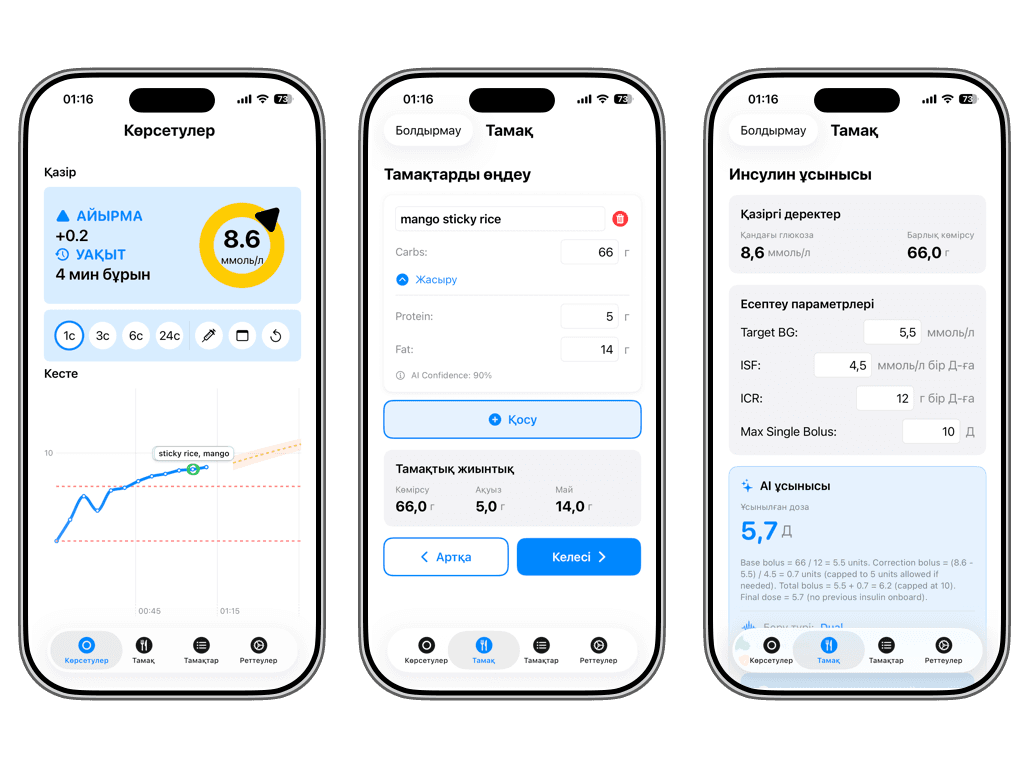
An advanced R&D system combining health-related real-time inputs, structured processing, and an AI reasoning layer for decision-support workflows.

Problem
Multiple health-related data streams arrived with inconsistent formats, timing, and signal quality, making reliable interpretation difficult for product and research teams.
Solution
A multi-source processing system that normalized incoming events and routed them to an AI reasoning layer for structured, interpretable outputs in a prototype interface.
Approach
  • Defined a unified event model to align multiple real-time health-related inputs into a single processing flow.
  • Implemented normalization, temporal alignment, and quality filtering before inference.
  • Added an AI reasoning layer to evaluate patterns and return structured decision-support signals.
  • Built a prototype interface to present analytics and AI-assisted interpretation in a clear operator workflow.
Outcome
  • Clearer interpretation workflows from otherwise fragmented, asynchronous data streams.
  • A reusable architecture for multi-source real-time ingestion, processing, and analysis.
  • A credible R&D foundation for further validation and controlled product exploration.
Interface preview
Prototype interface screenshots for a multi-source health data and AI-assisted interpretation system

A prototype interface for a multi-source health data system with analytics and AI-assisted interpretation.

Case study 3

Augmented reality prototypes for interactive mobile experiences

A prototype program demonstrating advanced iOS/mobile AR interaction patterns, including recognition, tracking, 3D content, and context-aware overlays.

Problem
Many mobile use cases need richer interaction than conventional interfaces can provide, especially when digital information must respond to physical objects, space, or movement.
Solution
We developed a set of AR prototypes showing image recognition, object tracking, interactive overlays, 3D visualization, and accessibility-oriented concepts in a controlled innovation context.
Approach
  • Mobile AR development focused on stable real-time interaction loops.
  • Image recognition and object tracking for physical-digital alignment.
  • 3D content rendering and animation for immersive feature validation.
  • Prototype-driven iteration to test interaction quality before productization.
Example capabilities
  • Recognition of printed materials and contextual digital overlays.
  • Digital annotations anchored to real-world objects during movement.
  • Animated 3D visualization in a handheld mobile AR experience.
  • Accessibility-oriented AR concept work for assistive navigation support.
Outcome
  • Demonstrated capability to build advanced mobile interfaces beyond standard CRUD workflows.
  • Provided reusable technical patterns for business, product, and innovation use cases.
  • Established a practical foundation for future AR feature exploration in mobile products.
Prototype showcase
Advanced mobile capabilityR&D
Image recognition with contextual overlay
Recognizing a business card and overlaying relevant digital information in real time.
Animated 3D model interaction
Rendering and animating a 3D model within a mobile AR experience.
Object recognition and tracking
Recognizing, tracking, and maintaining alignment with a physical object as it rotates and moves.
Accessibility-focused AR guidance
Overlaying visual guidance on a pedestrian crossing as part of an accessibility-oriented startup incubation project.